The Great Fire of London
The Fire
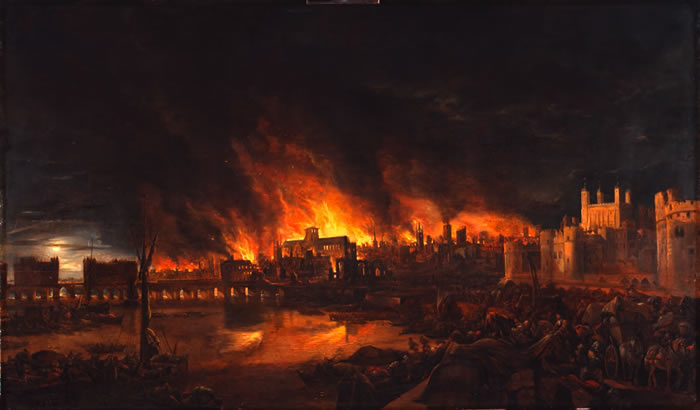 London of 1666 had evolved little from medieval times: foul cobblestone streets doubled as sewers. Wood and pitch homes lined the streets, some four stories tall. All structures were wooden, old, dry and closely packed. The City was ready to ignite.
The fire started on Pudding lane in the bakery of Thomas Farriner after midnight on Sunday September 2 and burned until the 5th. High winds and inadequate firefighting techniques enabled the fire to expand and consume the city.
The Toll
A staggeringly low total of six were recorded dead, a small sum for such a large fire. This could be a reporting error; in those times, deaths of the poor were often not reported. The fire is said to have destroyed the homes of 70,000 to 80,000 inhabitants (again, making a death toll of 6 seem unreasonably low). In total, this enormous blaze burned down 13,200 structures and 87 parish churches.
Firefighting Technology
The technique for stopping fires during this period of time was undeveloped like many other things. The technique used for a fire of this size was to create a firebreak, that is, to demolish a swath of buildings in the fire’s path to starve it and thus to stop and control it. Unfortunately, the mayor was very reluctant to make tough decisions, ultimately causing a lot more damage that could have been prevented.

Aftermath
People had to be resettled for the time being and King Charles II feared a rebellion brewing from the refugees. On the other hand, it is suggested that the fire really saved more people in the long run by destroying many unsanitary houses that harbored plague.